Amma Magan Tamil Incest Stories 3 Best [best] Jun 2026

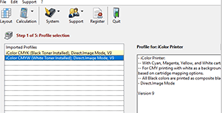
UNINET® has developed a series of software packages to enhance your IColor printing experience. The IColor® TransferRIP and ProRIP and ProRIP Essentials packages make it simple to produce spot color overprint and underprint in one pass. The Absolute White RIP helps you use an Absolute White Toner Cartridge in a converted CMYK printer, and create 2 pass prints with color and white. The IColor® SmartCUT suite allows your A4/Letter sized printer to produce tabloid or larger sized transfers! Use one or more with the IColor® 500, 600 and 800 series of transfer printers.
Use the IColor® ProRIP software to print white as an underprint or overprint in one pass.
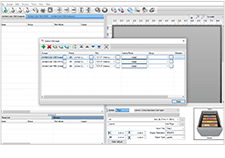
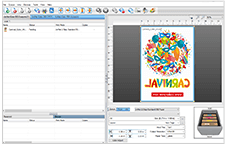
This professional version is designed for higher volume printing with an all new interface. Design files can be printed directly from your favorite graphics program, as well as imported directly into IColor® ProRIP. amma magan tamil incest stories 3 best
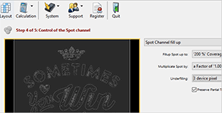
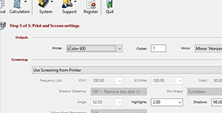
The IColor® ProRIP software allows the user to control the spot white channel feature. Three cartridge configurations are available: Spot color overprinting, where white is needed as a top color for textiles; Spot color underprinting for printing on dark or transparent media where white is needed as a background color and standard CMYK printing where a spot color is not needed. No need to create additional graphics with different color configurations – the software does it all – and in one pass! Enhance the brilliance of any graphic with white behind color! Whether your narrative ends in a bittersweet reconciliation
Compatible with Microsoft Windows® 8 / 10 / 11 (x32 & x64) only. —and as long as humans gather in kitchens,
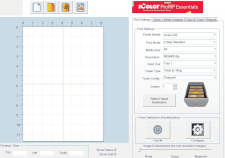
A simplified version of ProRIP which includes all of the most commonly used features of ProRIP with an easy to use interface. This Essentials version simplifies the printing process and allows the user to print efficiently and quickly without any training. All of the important and frequently used aspects of the software are included in this version, while all of the ‘never used’ or confusing aspects of the software are left out.
Comes standard with the IColor®540 and 560 models and is compatible with the IColor 550 as well.
Does not work with IColor 500, 600, 650 or 800 (yet).
Improvements over the ‘Standard’ ProRIP:
Whether your narrative ends in a bittersweet reconciliation or a permanent severing of ties, exploring the labyrinth of complex family relationships offers an unparalleled opportunity to study the human condition at its most raw, vulnerable, and fiercely protective.
A "juicy secret" that acts as a ticking time bomb—hidden relationships, illegitimate children, or past traumas that create constant, low-level tension until an inevitable reveal.
In the end, every family drama is a variation of the same question— How do I be myself when I am part of a we? —and as long as humans gather in kitchens, bury the dead, and raise the young, we will never run out of answers.
At the heart of every great family saga lies a web of . These aren't just simple disagreements over who forgot to take out the trash; they are built on decades of history, unspoken expectations, and the heavy weight of legacy. Complexity often stems from three main pillars:
Key Conflict: The family system resists the change, using guilt, gaslighting, and financial sabotage to pull the character back in. ✍️ Techniques for Writing Nuanced Conflict
Family dynamics are fluid. Two rival siblings might unite against a parent, only to betray each other when the immediate threat passes.
The most enduring family dramas—from Succession to The Godfather , or Little Fires Everywhere —succeed because they balance toxic behavior with moments of genuine warmth.
: The story unfolds in a relatable, slice-of-life setting. It begins with a woman named Mangalam coming home from a temple and noticing a commotion outside a hut. Her curiosity leads her to intervene, and the narrative builds its central themes from this grounded, realistic premise. The story uses everyday situations to develop its complex plot.
The pressure to maintain a reputation or continue a tradition that no longer fits the modern world.
One of the most potent drivers of family drama is the shadow of the past. Generational trauma occurs when the unhealed psychological wounds of parents are passed down to their children. This often manifests as repetition compulsion—a psychological phenomenon where individuals unconsciously recreate traumatic childhood dynamics in their adult lives, hoping to achieve a different outcome. A story tracking how a distant father inadvertently raises an emotionally unavailable son creates a tragic, cyclical narrative arc that readers instinctively recognize. 2. Conditioned Love and High Expectations
Family dramas offer a unique opportunity to represent diverse family structures and experiences. From non-traditional family arrangements to cultural and socioeconomic differences, these storylines can help audiences see themselves reflected on screen.
Whether your narrative ends in a bittersweet reconciliation or a permanent severing of ties, exploring the labyrinth of complex family relationships offers an unparalleled opportunity to study the human condition at its most raw, vulnerable, and fiercely protective.
A "juicy secret" that acts as a ticking time bomb—hidden relationships, illegitimate children, or past traumas that create constant, low-level tension until an inevitable reveal.
In the end, every family drama is a variation of the same question— How do I be myself when I am part of a we? —and as long as humans gather in kitchens, bury the dead, and raise the young, we will never run out of answers.
At the heart of every great family saga lies a web of . These aren't just simple disagreements over who forgot to take out the trash; they are built on decades of history, unspoken expectations, and the heavy weight of legacy. Complexity often stems from three main pillars:
Key Conflict: The family system resists the change, using guilt, gaslighting, and financial sabotage to pull the character back in. ✍️ Techniques for Writing Nuanced Conflict
Family dynamics are fluid. Two rival siblings might unite against a parent, only to betray each other when the immediate threat passes.
The most enduring family dramas—from Succession to The Godfather , or Little Fires Everywhere —succeed because they balance toxic behavior with moments of genuine warmth.
: The story unfolds in a relatable, slice-of-life setting. It begins with a woman named Mangalam coming home from a temple and noticing a commotion outside a hut. Her curiosity leads her to intervene, and the narrative builds its central themes from this grounded, realistic premise. The story uses everyday situations to develop its complex plot.
The pressure to maintain a reputation or continue a tradition that no longer fits the modern world.
One of the most potent drivers of family drama is the shadow of the past. Generational trauma occurs when the unhealed psychological wounds of parents are passed down to their children. This often manifests as repetition compulsion—a psychological phenomenon where individuals unconsciously recreate traumatic childhood dynamics in their adult lives, hoping to achieve a different outcome. A story tracking how a distant father inadvertently raises an emotionally unavailable son creates a tragic, cyclical narrative arc that readers instinctively recognize. 2. Conditioned Love and High Expectations
Family dramas offer a unique opportunity to represent diverse family structures and experiences. From non-traditional family arrangements to cultural and socioeconomic differences, these storylines can help audiences see themselves reflected on screen.
Use the IColor® TransferRIP software to print white as an underprint or overprint in one pass.
Designed for every day, short to mid run use, the IColor® TransferRIP software allows the user to control the spot white channel feature. Two cartridge configurations are available: White overprint, where white is needed as a top color for textiles; and white underprint for printing on dark or transparent media where white is needed a round color. No need to create additional graphics with different color configurations – the software does it all – and in one pass! Enhance the brilliance of any graphic with white behind color!
Compatible with Microsoft Windows 7 / 8 / 10 (x32 & x64) only.