ASComm IoT
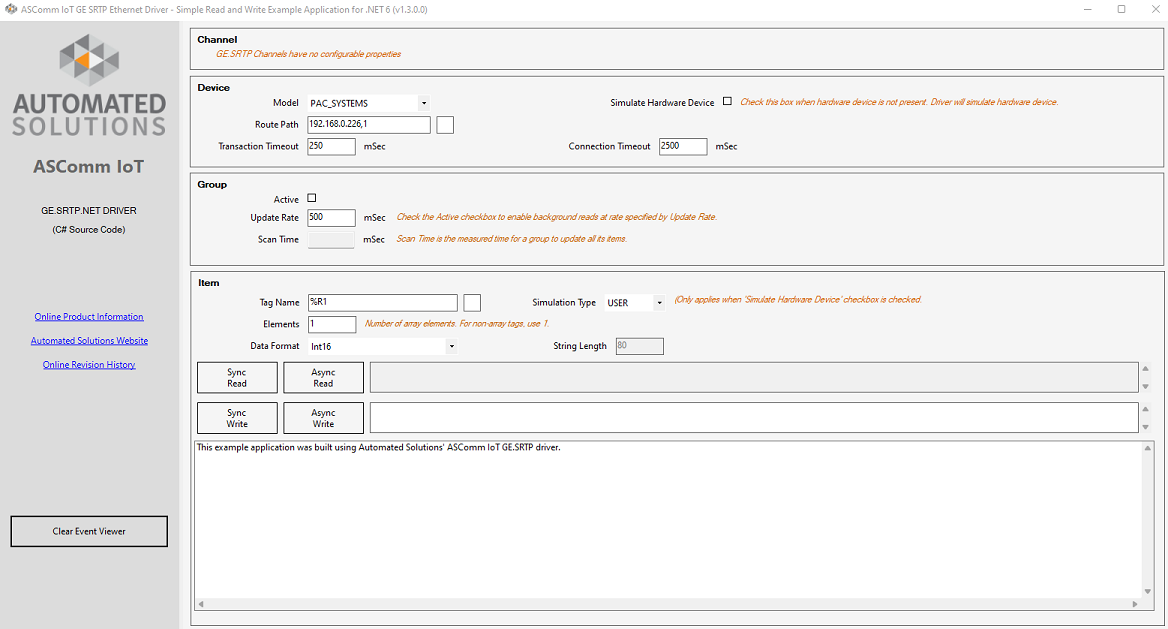
GE IoT Software Driver Example Application
Simple Read and Write
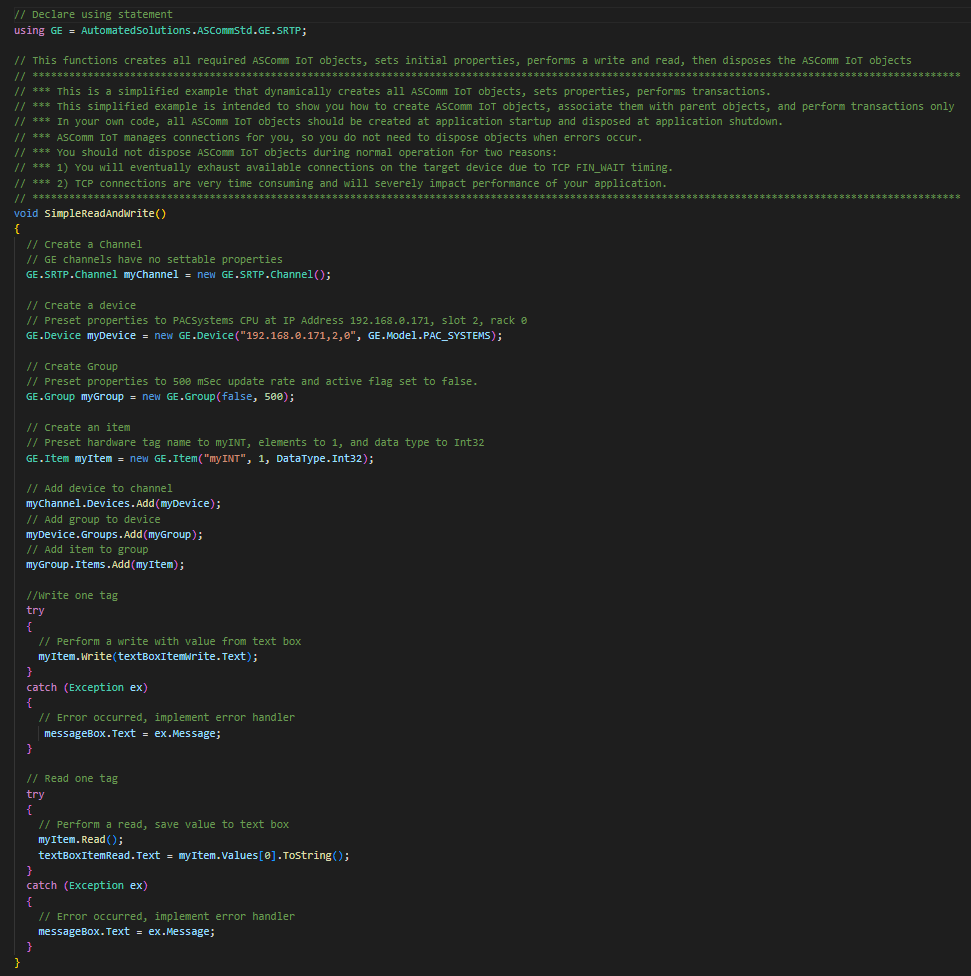
GE IoT Software Driver Code Example
ASComm IoT GE SRTP Ethernet Driver is a communications library that enables your .NET 10/9/8 applications to read and write registers on PACSystems RX3i, RX7i, Rxi, Series 90-30, and VersaMax controllers without PLC program modifications, OPC or third party libraries.
PACSystems symbolic register naming supported.
Use Visual Basic, C#, C++, and ASP.NET to create HMI, SCADA, data logging, and Industrial IoT applications targeting Windows, Linux and Android.
Powerful pre-built example applications with VB and C# source code included in development package.
Runtime-free for qualified applications
If using modern plugins, use the Text Carving tool to alter the shape of specific characters within a word to make it look unique and hand-styled.
Often, you must insert JPEG/PNG images into the text (e.g., a signature or a diagram) and wrap the Urdu text around it.
Introduction to InPage Katib Work InPage Katib work represents the digital evolution of traditional Urdu calligraphy. For centuries, a Katib (calligrapher) manually wrote books, newspapers, and signs using specialized pens and ink. The introduction of InPage software in 1994 revolutionized this industry. It digitized the complex, fluid Noori Nastaliq script. Today, InPage Katib work refers to the professional creation, formatting, and design of Urdu text using this industry-standard software. The Role of a Modern Digital Katib
: Professionals use the software to create sophisticated headings and body text that maintain the "hanging" calligraphic style.
writing style, which mimics traditional hand-written calligraphy.
Typing manuscripts, books, newspapers, or documents using phonetics or standard keyboard layouts in InPage.
InPage Katib Work: Bringing Traditional Calligraphy to the Digital Era
From Islamic theological texts to poetry and fiction, local publishers use InPage to ensure traditional readability.
To truly appreciate InPage Katib work, one must understand the shift from traditional to digital calligraphy. The Traditional Katib
Implementation notes
In the digital landscape of South Asia and the Middle East, the art of writing Urdu, Arabic, and Persian has found a unique home. While the Western world relies heavily on standard word processors like Microsoft Word, the intricacies of the Nastaliq script require specialized software. This necessity has given rise to a specific niche profession known as
A person doing Katib work is not merely a typist; they are a layout artist and typographer combined. Their responsibilities often include:
In 1994, an Indian software company developed InPage. It automated the complex rules of Nastaliq calligraphy, effectively turning the software into a digital Katib. Core Principles of InPage Katib Work
If using modern plugins, use the Text Carving tool to alter the shape of specific characters within a word to make it look unique and hand-styled.
Often, you must insert JPEG/PNG images into the text (e.g., a signature or a diagram) and wrap the Urdu text around it.
Introduction to InPage Katib Work InPage Katib work represents the digital evolution of traditional Urdu calligraphy. For centuries, a Katib (calligrapher) manually wrote books, newspapers, and signs using specialized pens and ink. The introduction of InPage software in 1994 revolutionized this industry. It digitized the complex, fluid Noori Nastaliq script. Today, InPage Katib work refers to the professional creation, formatting, and design of Urdu text using this industry-standard software. The Role of a Modern Digital Katib
: Professionals use the software to create sophisticated headings and body text that maintain the "hanging" calligraphic style.
writing style, which mimics traditional hand-written calligraphy.
Typing manuscripts, books, newspapers, or documents using phonetics or standard keyboard layouts in InPage.
InPage Katib Work: Bringing Traditional Calligraphy to the Digital Era
From Islamic theological texts to poetry and fiction, local publishers use InPage to ensure traditional readability.
To truly appreciate InPage Katib work, one must understand the shift from traditional to digital calligraphy. The Traditional Katib
Implementation notes
In the digital landscape of South Asia and the Middle East, the art of writing Urdu, Arabic, and Persian has found a unique home. While the Western world relies heavily on standard word processors like Microsoft Word, the intricacies of the Nastaliq script require specialized software. This necessity has given rise to a specific niche profession known as
A person doing Katib work is not merely a typist; they are a layout artist and typographer combined. Their responsibilities often include:
In 1994, an Indian software company developed InPage. It automated the complex rules of Nastaliq calligraphy, effectively turning the software into a digital Katib. Core Principles of InPage Katib Work