Let’s look at a hypothetical (but common) example. Sarah is a marketing manager who was laid off. Instead of posting "Excited for my next opportunity!" (sterile), she posted a series of "Patch Notes."
Post articles or thoughts related to your career to show expertise. 🚩 Red Flags to Delete Immediately
Never delete your old "bad" content. Patch it.
In the video, she showed her old, confusing stories (the tear). Then she showed a template she borrowed from a senior PM (the stitch). Finally, she showed how her dev team's velocity improved (the scar).
A resume might list "Python" or "Graphic Design" as a skill. A patched profile proves it by linking to live code repositories, design iterations, or video tutorials created by the candidate. It shifts the hiring paradigm from "take my word for it" to "see for yourself." Soft Skill Evaluation
That era is over.
Leo nodded. “Good. Because we don’t need another perfect patch. We need someone who knows how to sew the real pieces back together.”
The old model treated your career like a final, bound book—complete, polished, and closed to editing. The new model, driven by patched social media content, treats your career like .
Hiring managers are drowning in identical resumes. Everyone has “leadership,” “strategic thinking,” and “results-driven” on their CV. But a patched social profile might reveal an unusual combination: a data scientist who also sketches architectural plans, or a nurse who runs a gaming clan.
When people search for terms that imply they want to break DRM or access paid content without permission, they often encounter significant risks. A common threat is the prevalence of malware:
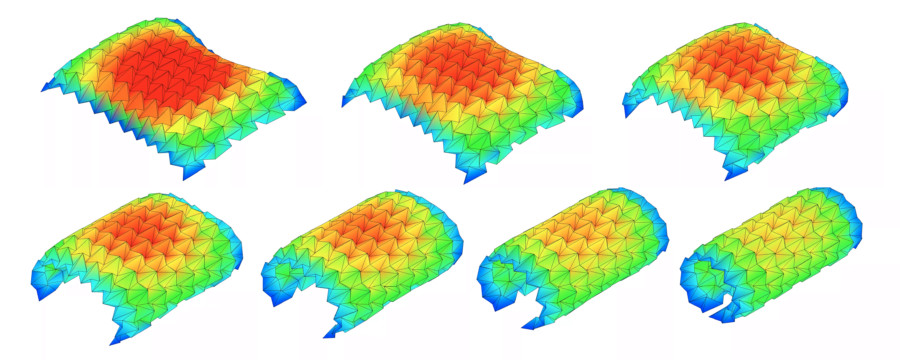
STRAIN VISUALIZATION
Cauchy strain or engineering strain is a unitless measurement of how much a material is being stretched or compressed under load.
The Strain Visualization illustrates the strain across an origami sheet by mapping it to a color from blue (no strain) to red (max strain).